Brand2025
Brand.
Three routes and a brand built for motion
Context
George Matelich and his co-founder came to us with a product that was ahead of its brand. Upload a data room and Rely structures it, checks it against what is on record and flags what does not match.
Problem
They wanted a website with motion that showed the product, but there were no brand assets to build it from. You can’t animate what doesn’t exist yet.
Approach
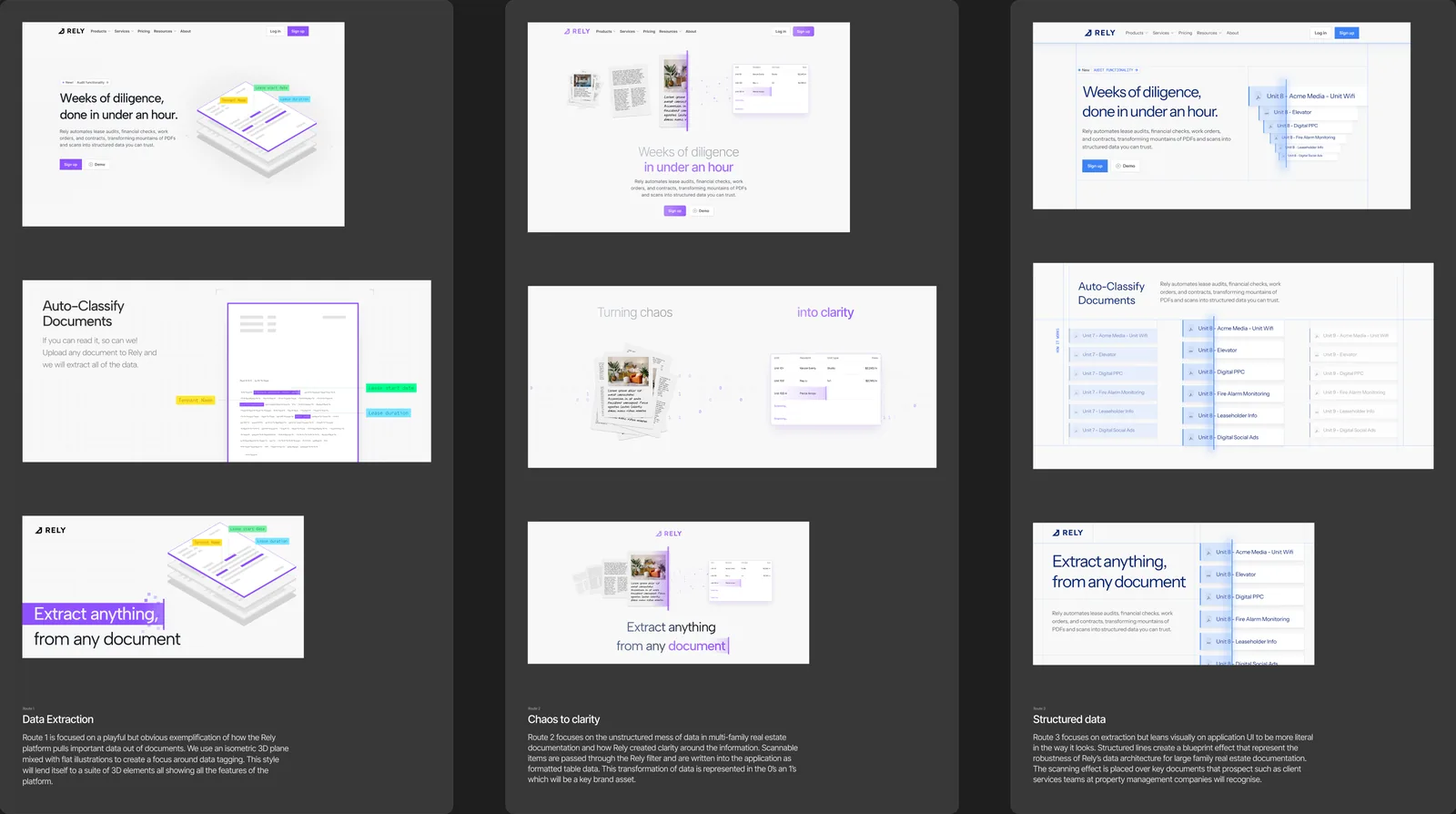
So brand came first. We built three routes, isometric data extraction, chaos to clarity and a blueprint-style structured data look, each shown on a hero, a feature section and social posts. We tightened the logo for a full rollout. Rely chose the isometric route, and we reworked it to tell one story: messy documents in, clean structured data out.
Outcome
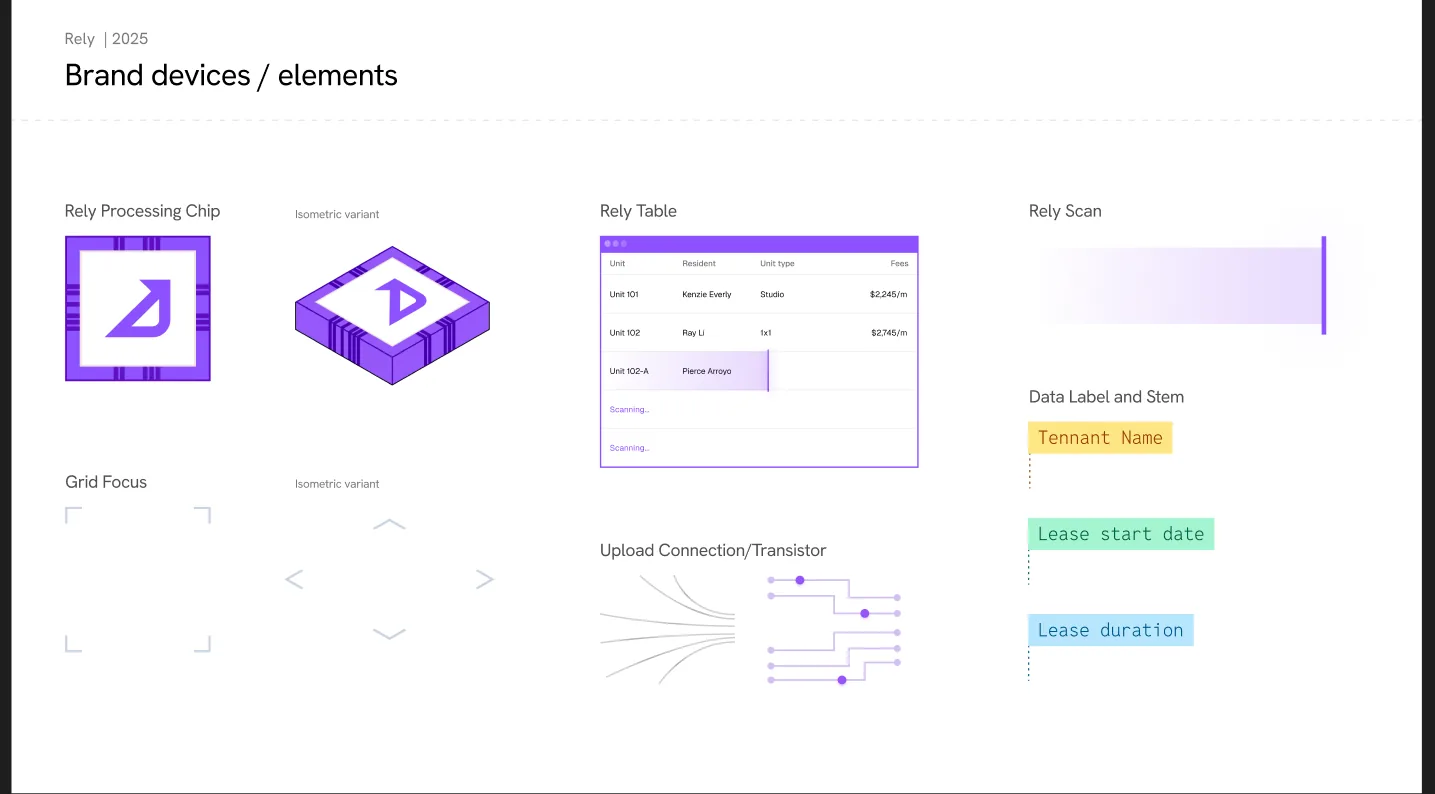
A set of brand devices made to move: the Rely chip, the table, the scan and the file stacks that the website then brought to life.
Websites2025
Website.
A site that shows the product
Context
Rely’s buyers are busy acquisitions and asset management teams. The site had to make a complex, document-heavy product obvious to them.
Problem
George was clear about what he did not want: autoplay videos and statements that tell the reader nothing. He wanted a clear, visual example of what the product does.
Approach
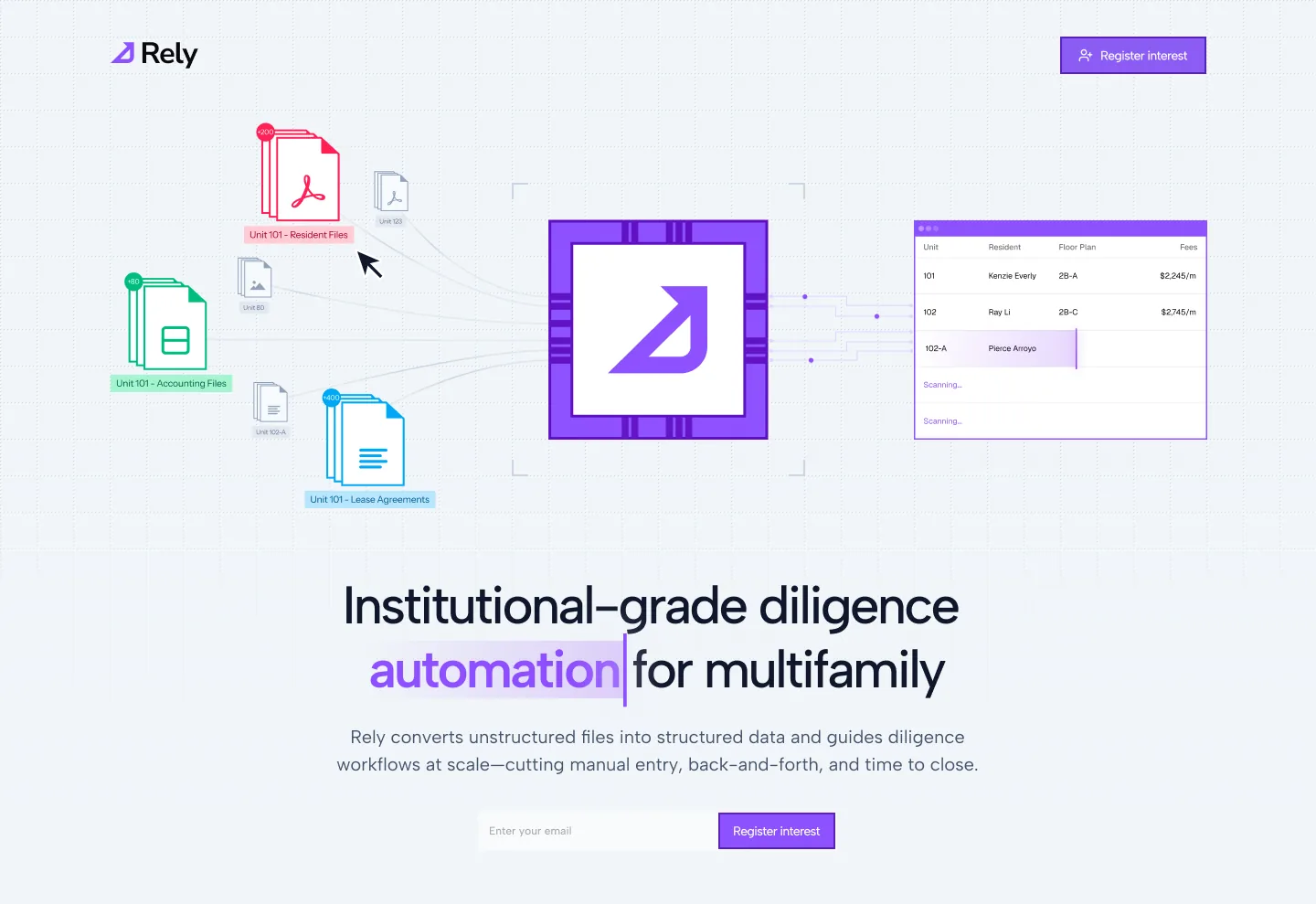
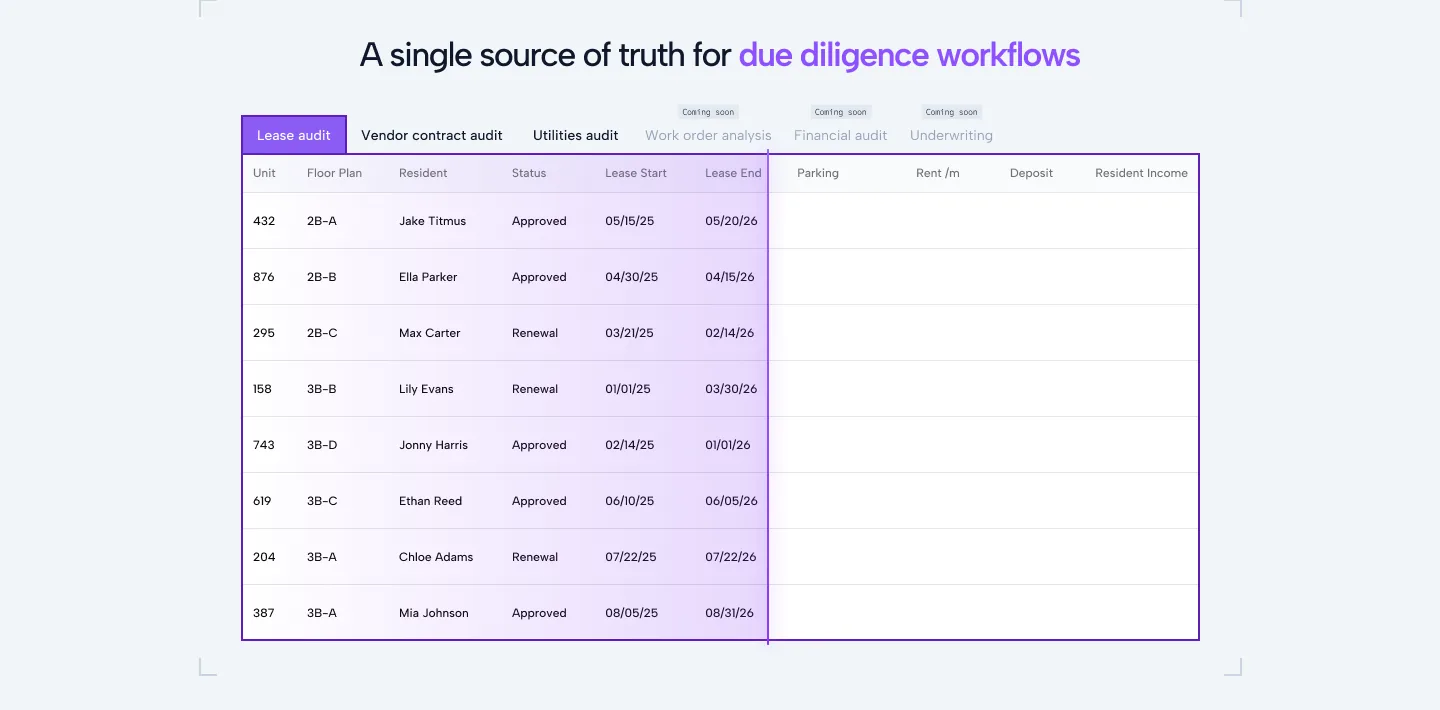
We built the site around the moment that sells Rely: seeing where the documents and the records disagree. A scroll-driven animation fills a rent roll table with extracted data, feature cards animate on hover and the whole site drives to one action. A CMS-backed customers page lets Rely publish case studies itself.
Outcome
The site went live on tryrely.ai, and Rely’s team edits it themselves in Framer.
Websites2026
Website restructure.
One site, four buyers
Context
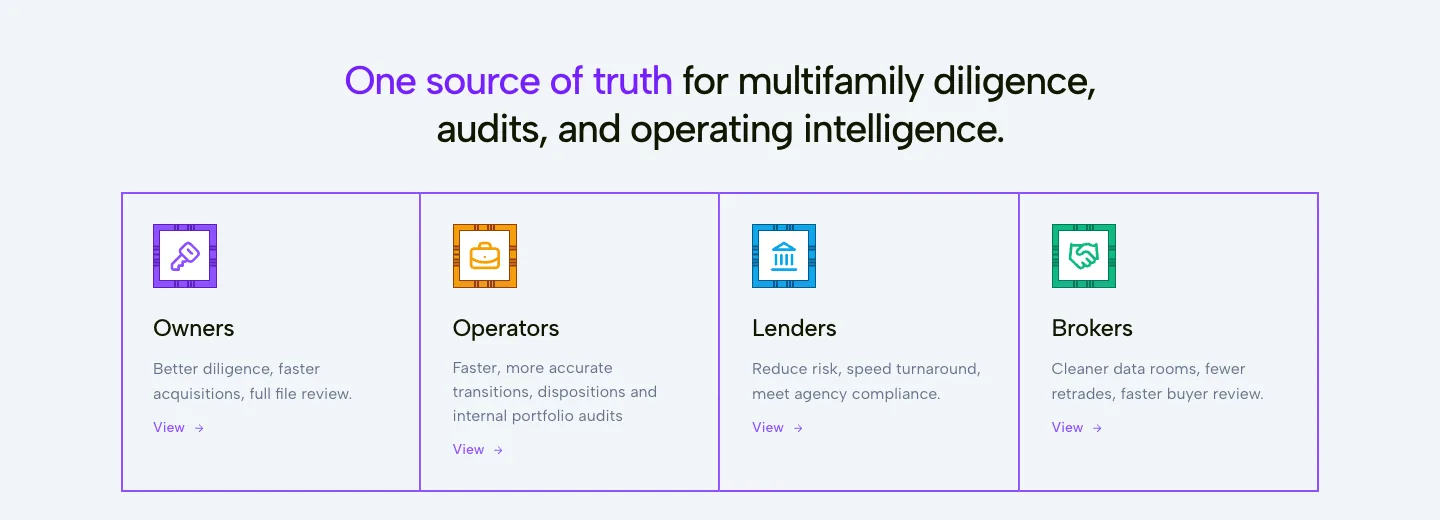
After its seed round, Rely’s customers had widened to owners, operators, lenders and brokers.
Problem
One homepage was trying to speak to all of them at once, and lenders told George the site did not seem to be for them.
Approach
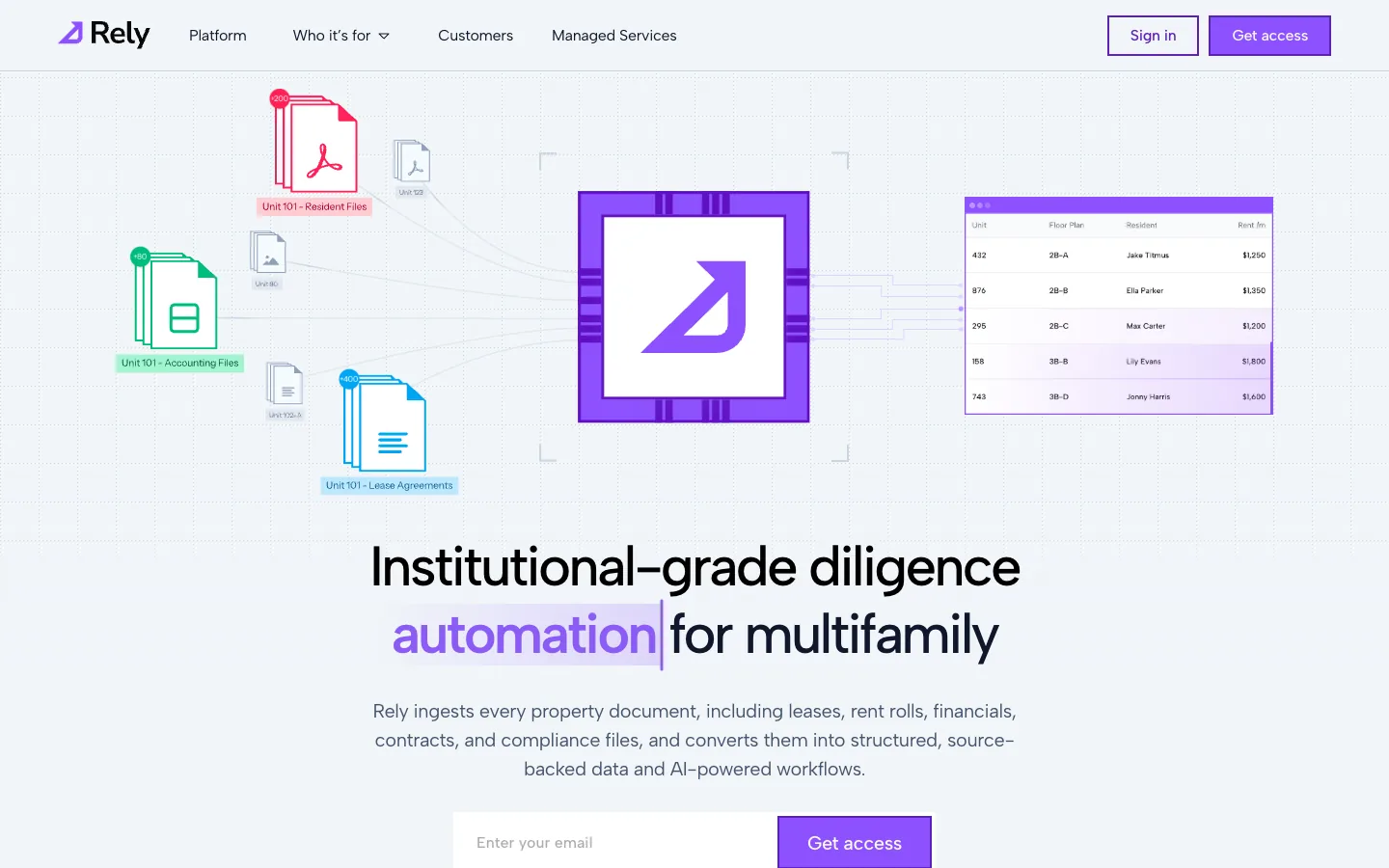
We rebuilt the information architecture around who is reading: a clearer homepage, a Platform page and four persona pages on one shared template. Each answers the same questions: the problem you have, what Rely audits for you, what it surfaces and why you can trust the data. We kept use cases off the Features page on purpose, because they made it harder to scan.
Outcome
The restructure launched with a dedicated page for every buyer type, new animated tables and proper tablet and mobile layouts.
Marketing2026
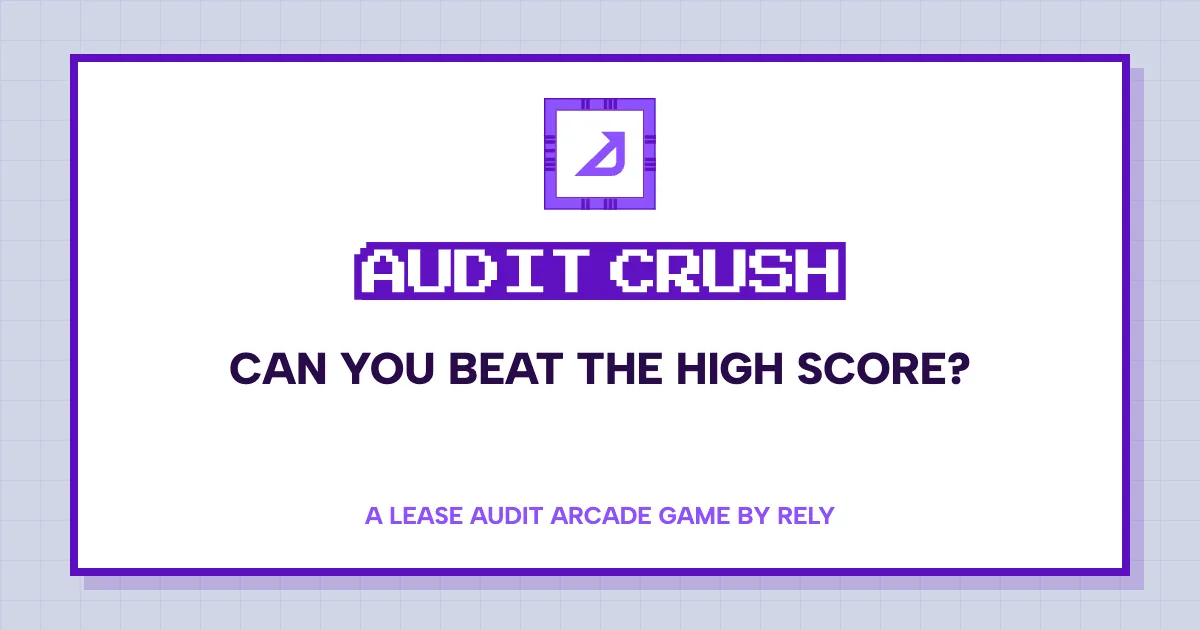
Audit Crush.
An arcade game for lease audits
Context
Rely’s team had printed t-shirts that made the product look like a video game, and people loved them. George wanted to take the joke further: a simple browser game on its own domain.
Problem
The brief was refreshingly honest: keep it simple, keep it a brand play. It had to sell the product without anyone pitching, and Rely had to be able to host it without us.
Approach
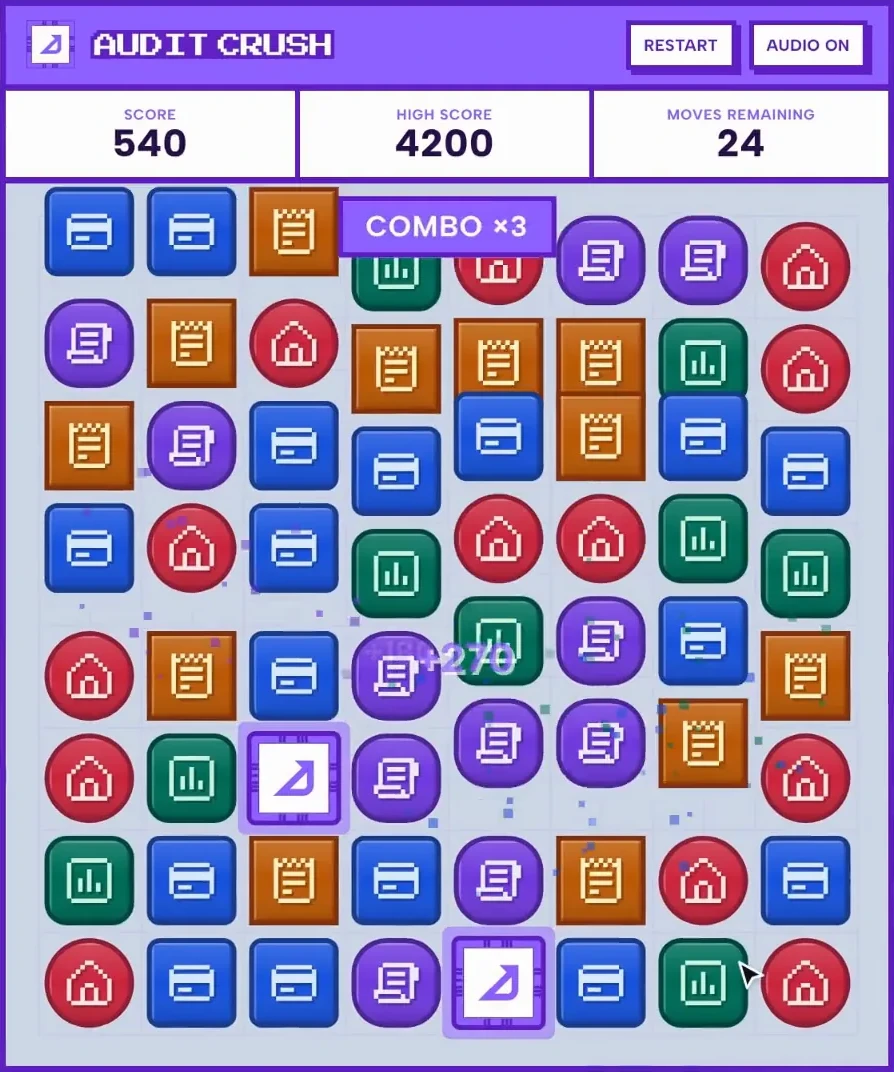
We prototyped more than one game. An endless runner was fun, but match three said more about the product. Line up receipts, invoices, statements, contracts and utility bills to reconcile them. Match four to make a RELY tile, which clears every document of that type. Every game ends on a leaderboard with a name and email form, so the game doubles as lead capture.
Outcome
We shipped it as a single HTML file with a README for Rely’s developer. Going live took two small endpoints and one config value, and Audit Crush now runs at leaseaudit.ai with Rely’s own leaderboard behind it. Play Audit Crush at the top of our work page.